When a clogged drain strikes, property owners usually choose between two drain cleaning methods: A drain snake or a high-pressure water jet. The right choice depends on the cause of the blockage and the condition of the pipe.
What Is Hydro Jetting?
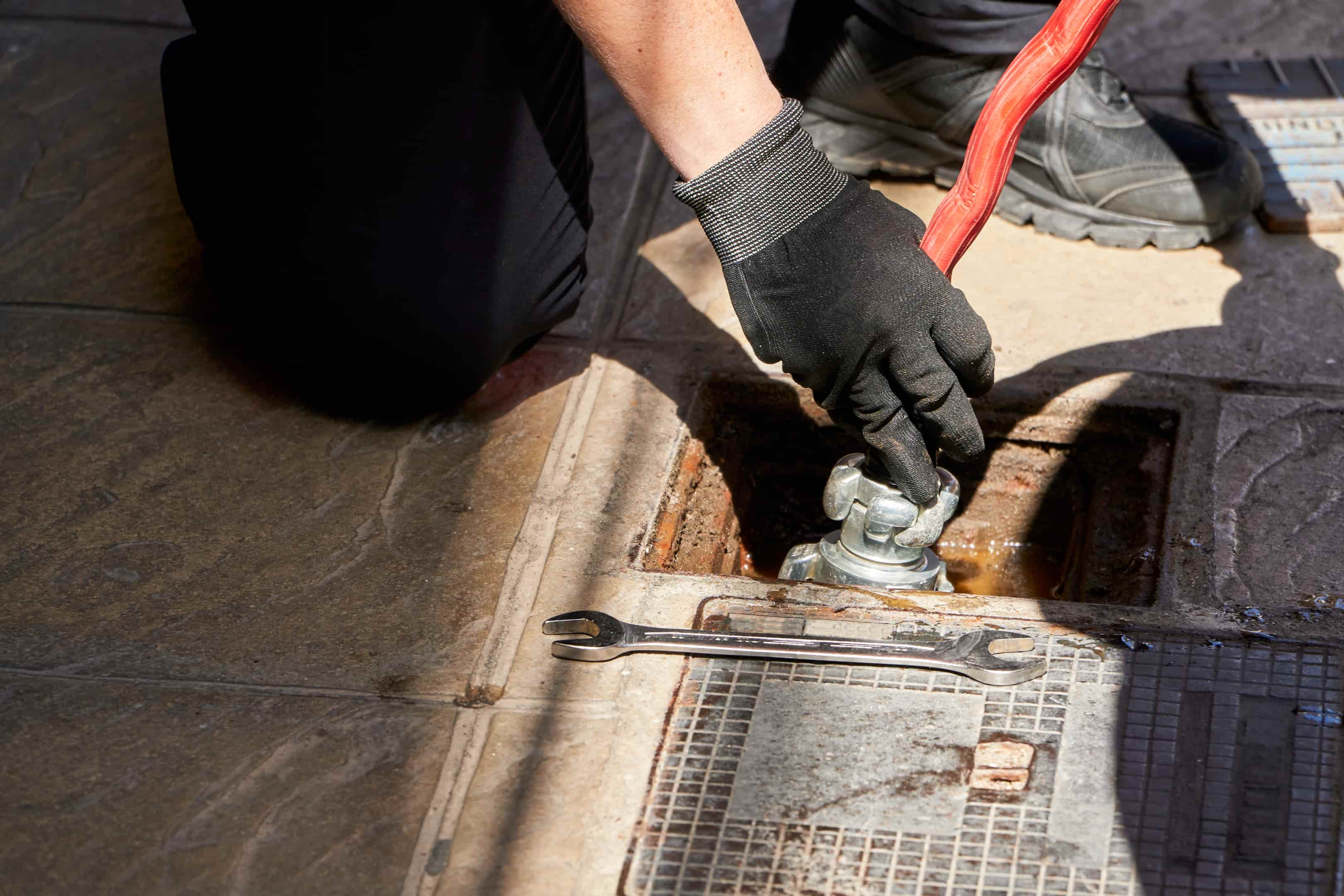
Drain jetting sends pressurized water through a specialized nozzle to scour the inside of a pipe. According to the U.S. Environmental Protection Agency’s fact sheet on sewer cleaning, jetting directs high-velocity water against pipe walls to remove debris and grease buildup, clear blockages, and cut roots in small-diameter pipes. The water scrubs the pipe’s full circumference, making it a thorough form of sewer line cleaning.
Hydro Jetting vs. Drain Snaking: Key Differences
Drain snaking works mechanically. A technician feeds a flexible steel cable into the line, and a rotating tip breaks up the obstruction. The EPA notes that these rotating blades cut roots and loosen grease and debris, but it also flags a limitation: Mechanical cleaning doesn’t effectively remove sand or grit and may only loosen it.
The differences come down to three factors:
- Coverage: A drain snake opens a path through the clog, while jetting cleans the entire pipe wall.
- Residue: Snaking can leave sand and grit behind. Jetting carries loosened material out of the pipe.
- Best Use: Snaking handles a single, localized blockage. Jetting suits recurring clogs and heavy buildup.
When to Choose Hydro Jetting
Jetting makes the most sense when a line clogs repeatedly or carries a steady flow of kitchen grease. Restaurants are strong candidates because grease coats pipe walls rather than collecting in one spot. The EPA describes jetting as most efficient for routine cleaning of small-diameter, low-flow lines, which describes most home and small-business drains.
Is Hydro Jetting Safe for Your Pipes?
Is hydro jetting safe for old pipes? That depends on the pipe’s condition, which is why a camera inspection should come first. The EPA calls television inspection the most effective way to check a sewer’s internal condition. A camera reveals cracks, roots, and collapsed sections before pressure reaches the line, so a technician can recommend snaking or repair if a pipe is too fragile. The EPA also advises caution when jetting lines connected to basement fixtures, since pressure can push wastewater back into the building.
Signs Joplin Homeowners Need Drain Cleaning
Watch for these warning signs:
- Several fixtures draining slowly at once
- Gurgling from a toilet or sink when water runs elsewhere
- Sewage odors near floor drains or in the basement
- Water rising in a tub or shower when a toilet flushes
One slow sink usually points to a local clog, while trouble in several fixtures suggests a main-line blockage. If sewage backs up from the city’s side, report it to the City of Joplin Public Works Department at 417-624-0820, ext. 565.
Don’t wait for a slow drain to become a sewage backup. Spring River Drain & Sewer Inc. can start with a camera inspection, so you’ll see what’s inside your pipes and get an upfront quote before any work begins. Our team handles drain and sewer plumbing in Joplin, MO, for homeowners and business owners alike. Call (417) 487-4152 today to schedule drain cleaning in Joplin, MO, with a plumber who clears the clog and explains the fix.